I like amber. It’s beautiful, has a nice not-quite-rock but not-quite-gem quality to it. It’s warm. It has dinosaur DNA.
Today I was interviewed prospectively by a mother who was looking for a new pediatrician. I always encourage parents to bring their kids with them. Kids generally like me right away, which is an advantage in my line of work. I'm not as good with adults, so having the kid there is often what sells me to the parent. She brought her 18-month-old daughter. While trying to carry on
 a conversation with the mother, trying to sound well-informed, I was playing peekaboo with the kid who was laughing pretty much the whole time we spoke.
I noticed that the child was wearing a short necklace of amber beads. Showing off my multicultural insight, I asked if they were Swiss or German. Mom smiled and told me they were from Germany, and the parents moved here with a job from a multinational technology firm. Mother said authoritatively that it was "to help with the teething."
She told me she was looking for a new pediatrician because every time she went to her current pediatrician, she saw a different doctor. That wasn't possible in a one-person practice like mine, of course. She liked that. I explained my belief in the benefit of a relationship between doctor and patient, even if that were a baby. I know all my patients, I will see them any time, they can call me any time. She liked that, too. She had been recommended to me.
This lovely little girl had not been vaccinated. Her mother explained that she believed that since the child was home with her all the time, she wasn't exposed to diseases and didn't need vaccination during her infancy while her immune system was still developing. She said that there was no point in putting her child at risk by vaccinating her. This mother told me that they like to travel and expect to go to central Africa in about a year. They have family in India and will visit there soon.
I have known about the amber necklace tradition since the first child of my dear Swiss friends from grad school. Has this ever been studied for teething? Does it work? How, exactly would it work? If amber is beneficial, will it work for other types of pain? What about toothaches or cavities? I didn't know any of the answers to these questions. What about the form of the amber--what if you crushed it into a powder and ate it or rubbed it onto the gums, would it work even better? Are small beads better than big beads for teething? And what about beads in general--are they safe for 16-month-olds? How about necklaces in general?
The things we do for our children are decisions. Maybe we don't have to stop and research everything, but I wonder about how all of us make medical decisions for our children.
Most parents and nurses believe that teething causes many different symptoms, including fever, pain, and drooling. Why do they think this? Does teething really cause these symptoms?
Now I am more confused than ever. There's this teething thing that's definitely real: kids go from no teeth to having teeth. That's an observable event. The first decision (1) is to decide if it's a problem. Most parents think so, but when objectively studied, a lot of the symptoms we observe look like
 they are caused by other things. But let's say the parent decides that teething does cause a problem. The next decision (2) is to decide if it needs to be treated. What will happen if we don't treat teething--what is the danger to the child? The parent must decide that the problem needs treatment, rather than, say, support and observation, in order to get to a decision (3) about what kind of treatment is appropriate. Pain-killing teething gel will definitely make the kid's gums numb, but it doesn't last long. Treatment decisions can be tough. What is the likely benefit of an amber necklace (4)? An amber necklace seems benign enough, but a necklace on a toddler has risks. So there's a decision (5) about risks. What if the risk is rare? That adds a decision considering how serious that rare risk might be. You might not be too concerned about the child swallowing a bead. What about choking on one? Somehow you have to decide if your measurement of benefit (4) outweighed your measurement of risk (5). That is a decision (6) too.
I wondered how she had decided about vaccinations. I didn't ask her why she had refused them. I asked her about the pieces of the final decision. How did she decide the amount of risk? How did she evaluate the benefit? What did she believe? What did she know?
Belief beats knowledge every time. How much do we have to know before it changes our beliefs?
Epilogue: After about 2 hours of friendly chat and keeping that sweet little girl amused, I was sure that this mom wasn't going to choose me as her child's doctor. I was surprised that she did, and together we made a plan to bring the child up to date on her vaccinations.
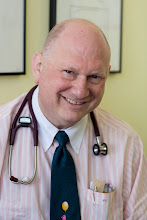
The guy in the picture on the left is Thomas Bayes, whose ideas about making decisions remain interesting to me. The picture at the top is of the Amber Room, looted from the Catherine Palace in St. Petersburg by the Germans at the end of World War II, and lost since then.


 Posts
Posts